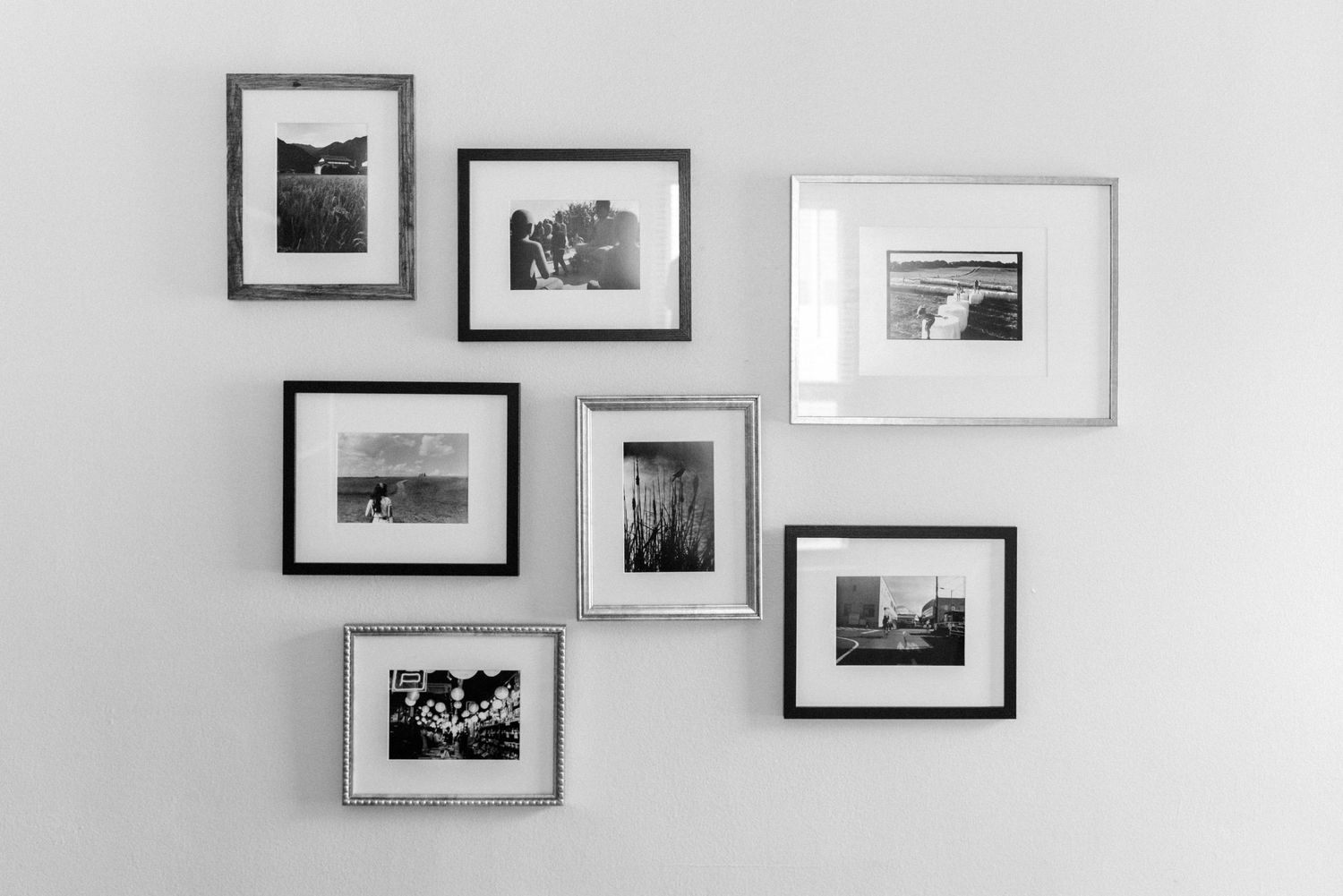
Printing Your Wedding Photos
It's no secret that film has been surging through a sort of renaissance in the last few years, especially in the wedding photography spaces. Photographers are realizing the different sets of pros and cons to utilizing the medium in favor of those that come with digital photography, with some even combining the two into their own hybrid workflow. Couples who prioritize a potential for more character in their photographs are enjoying what it offers to the wedding day experience, appreciating film photography's slight imperfections and physicality. Whether for the commercial long haul or not, film remains chronicling life's important moments.
The process typically looks like this: Shutters are clicked until the roll of film is finished, that roll and any others like it get dropped off at a lab, that lab processes the film and scans it to a computer, and scanned photos are delivered to an email address. Simple, straightforward, and streamlined for the modern customer. However, I want to draw attention to what happens after. Once the scans populate an inbox, how often are they downloaded and either live on a phone or computer until they're caked with electronic dust? For as much as we hear that people are loving the timeless physicality of film photography, there are too many photographs dying an early digital death on hard drives around the world. If we imagine photographs as having a lifecycle, the absence of printing and displaying an image cuts its lifespan dramatically. It's akin to having a child, putting them through school, and then shipping them off to a deserted island for the rest of their life. A bit of wasted potential, don't you think?
From photography's inception, the end result was always meant to be printed, either as something to hang on the wall or nestled in the pages of publication. When it's received in the intended space, a photograph's presence can engulf the senses and take its viewer somewhere far beyond themselves. There's joy to be found in giving a photograph a full life, because by doing so you empower it to bring a cherished memory or a loved one or a reminiscent escape to the forefront of your day as your eyes rest upon it. I want to remind us of that for all photographs made, not just those on film. And ESPECIALLY those made throughout the course of a wedding day.
What are Darkroom Prints?
Darkroom printing is a traditional photographic process where a film negative is mounted onto a carrier to be placed in an enlarger. An enlarger shines light down the film negative to be focused by a lens, and a positive image is projected onto a sheet of photographic paper. Just as exposure affects how the photo turns out on film, the amount of time the enlarger projects the image on the paper affects the print.
It's also during this time that the printer can make any manipulations and creative adjustments to the print, similar to digital editing today. Then, the print goes through a series of three chemical baths to develop the latent image, yielding the final result. This hands-on method has been used for over a century, transforming the negative into a tangible photograph.
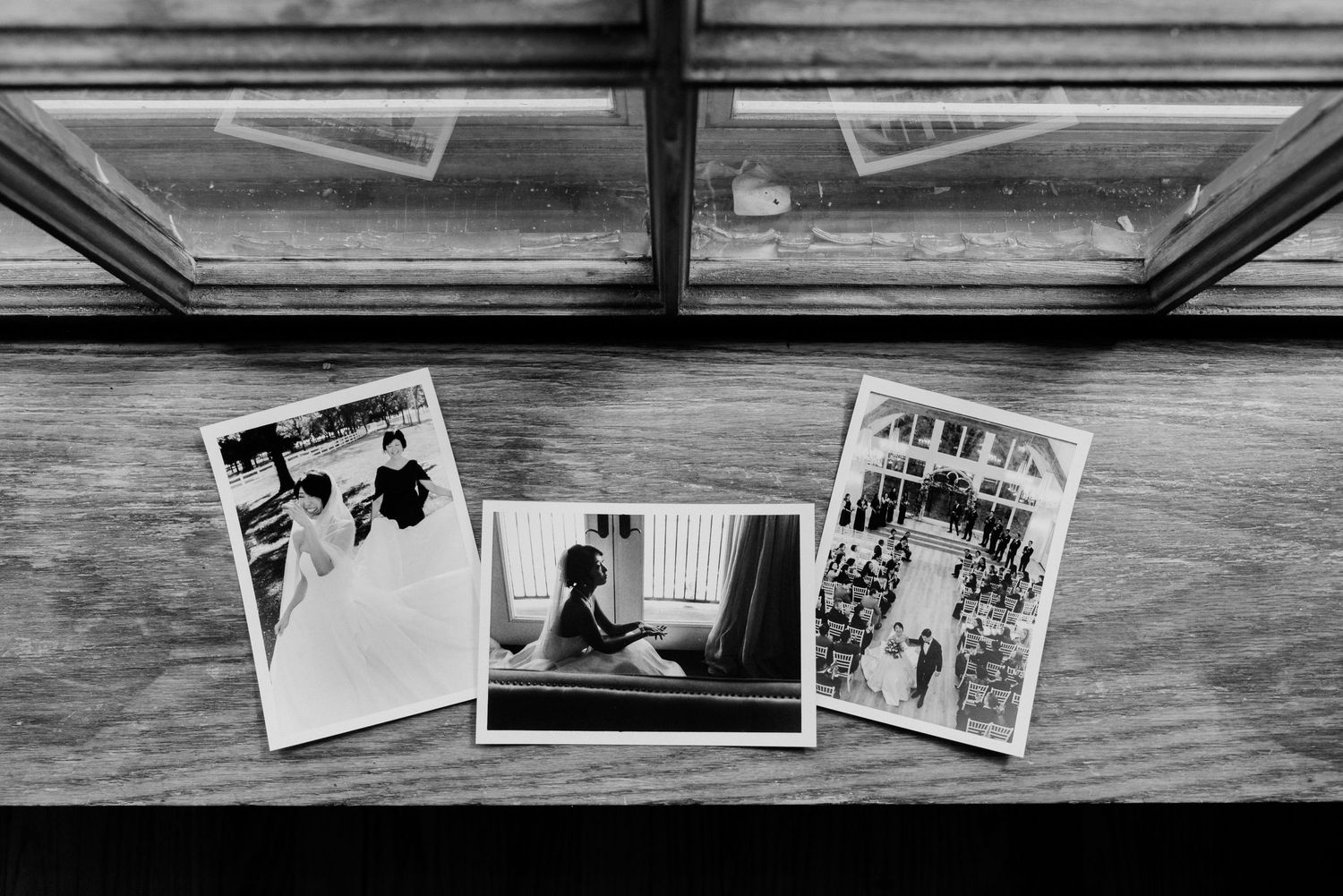
Creating Timeless Wedding Prints in the Darkroom
1. Chemicals
There are three chemical trays that need to be readied before printing can begin. These consist of a development bath, a stop bath, and a fixing bath. The development bath chemically reacts with the exposed print paper to reveal the image from the film negative. The stop bath stops all further chemical reactions from the developer, halting any potential changes in tonality. This also prepares the print for the final step. Lastly, the fixing bath effectively preserves the image as it was developed, keeping it secure from the effects of any ambient light that touches it. This ensures the print will retain its crispness instead of fading quickly.
2. Loading a Negative
Once the chemicals are prepared, select a film negative from its storage sleeve. The negative is loaded on a designated negative carrier that sandwiches the film steady and flat. Once loaded, the carrier is placed in the enlarger for light to be cast through the negative. The bottom of the enlarger also has a mounted lens through which the positive image from the negative shines down towards the print paper.
3. Exposing the Paper
With the negative in place, the positive image needs to be focused before photosensitive paper is placed below the enlarger. Focus is achieved by adjusting the height of the enlarger in relation to the printing area, and checking that the film grain is in focus. After focusing, the exposing process begins.
Each print requires a trial and error process of determining exposure time and any necessary manipulations such as exposing certain areas to more light, or blocking light from others. This affects the end exposure of each area of the print and the final look as a whole. Once the exposure time and manipulations are figured, a final print can be made.
4. Development
After exposure, the print must immediately be submerged in the first of the three chemical bath trays. The tray will be gently rocked back and forth for the duration of the development time to encourage full and even chemical reactions across the entire page. This process of submerging and agitation of the chemicals will happen through all three trays.
5. Wash and Dry
The final stage is a washing and drying of the print. Prints need to be washed so no lasting chemical residue dries to the print, leaving spots and unwanted artifacts. After washing they can be hung to dry and then inspected for any final touch ups or needed reworking.
The Lasting Value of the Darkroom
While end result may bear resemblance to an inkjet print at first glance, this traditional way of working offers a spirit of artistry and craftsmanship that automated services can't replicate. Each choice made by the printer imprints the photograph with subtle characteristics. From the paper stock to the chemistry of the developer, and even the shaping of light during each split second of exposure, they all culminate to create variations in tone and texture. This inherent variability lends each to be a truly singular piece instead of a mass producible copy.
For couples, this means your wedding memories are preserved as an heirloom work of art that was crafted with intention. This should be the ultimate through line in the wedding photography process- one of intentionality and care. A wedding photographer worth their salt will, through attentiveness and consideration, serve the moments cascading down the wedding day. From capture, to editing and processing, to final delivery, we expect a standard that speaks to the quality of the craft. If we, in this renaissance of analog photography, are leaning into ways of working that are steeped in the tangible, we should continue to pull the thread of care on through the act of printing and displaying our photographs.
Imagine holding a print from your wedding day that carries the mark of every careful decision along the way. This is what darkroom printing offers — a photograph that lives, breathes, and lasts. Available as an exclusive add-on to your wedding package, each print is handcrafted so that your photos don't stay on a screen but live with you every day.
For more on film photography for wedding days, look at this photojournalistic take on a wedding day shot solely on black and white film.